Spinning-disk confocal
Spinning-disk systems offer a highly versatile camera-based confocal imaging technology. Due to high scan speeds, spinning disk offers an ideal solution for imaging large volumes and quantitative high-content imaging applications. In addition to this, spinning disks subject samples to relatively low photo stress making the technology well suited to live-cell and organoid imaging applications. Resolution, sample penetration and live-cell imaging performance can all be boosted with advanced image processing solutions, further expanding the utility of the technology.
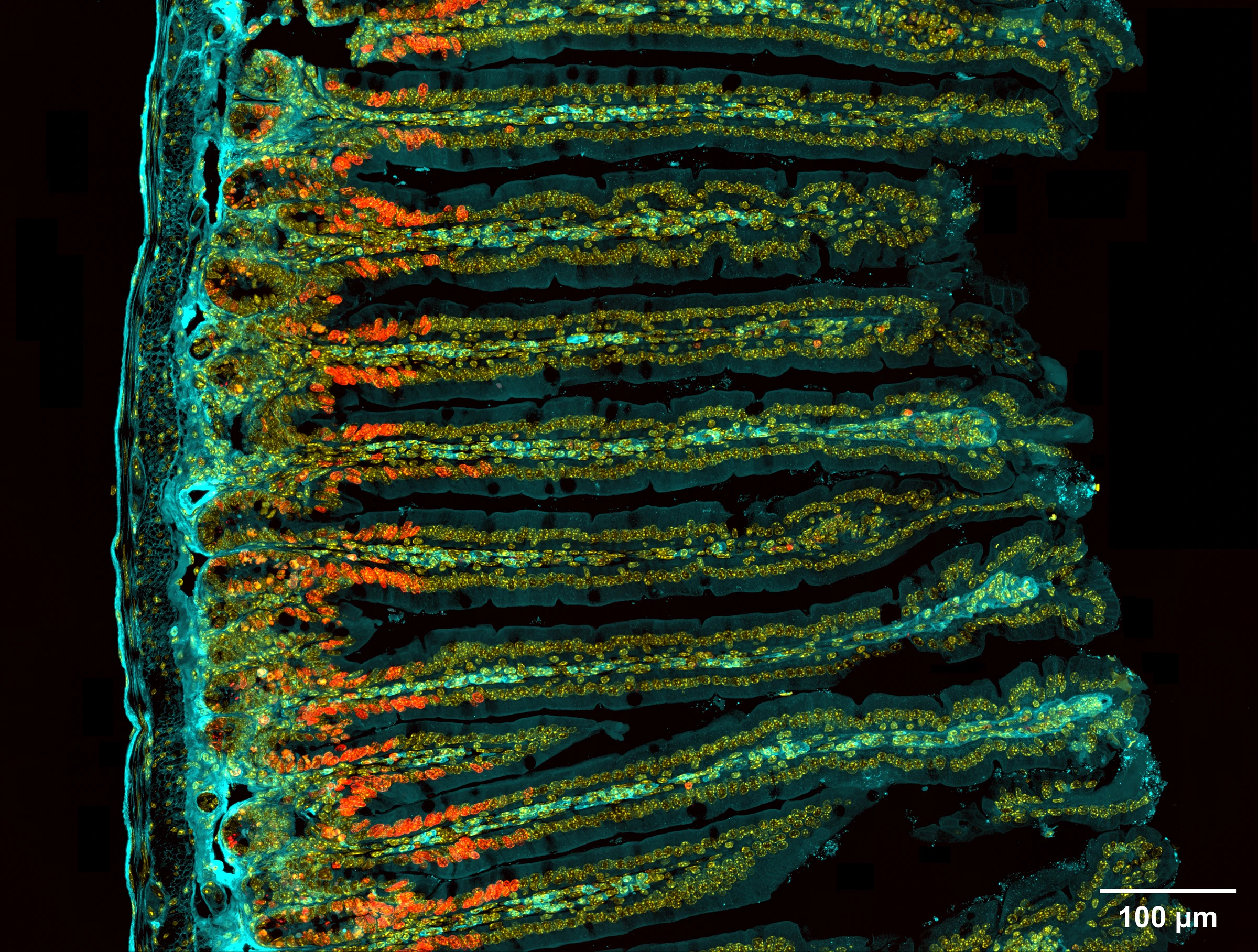
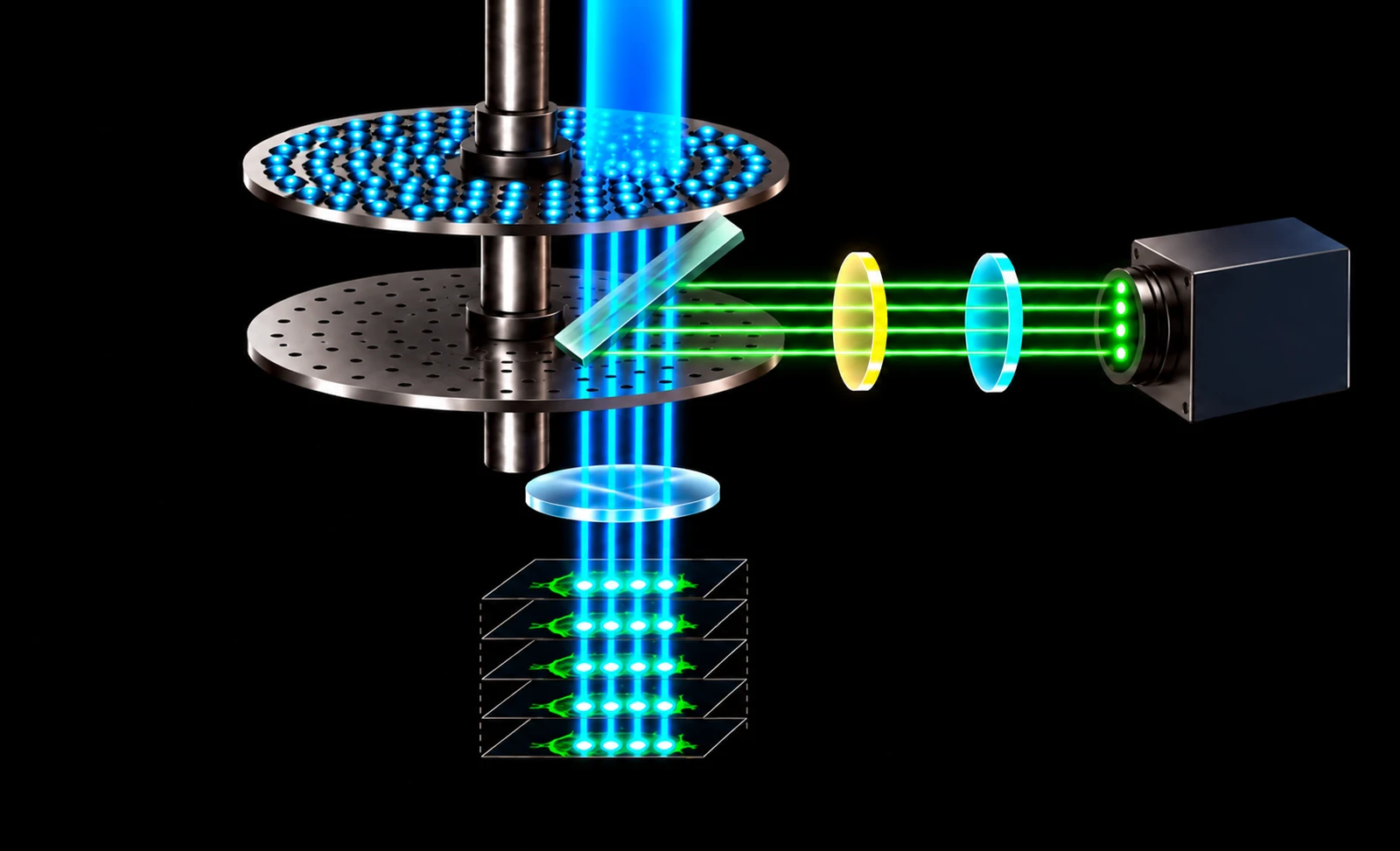
Instead of scanning a single excitation point across the sample, spinning disks use a rotating Nipkow disk with an array of pinholes. As the disk spins at high speed (~4000-19,000 RPM), multiple pinholes illuminate the sample simultaneously, parallelizing sample illumination and dramatically increasing scan speed. As with traditional point scanning confocal systems, the emitted fluorescence still passes back through the pinholes, rejecting out-of-focus light and producing a confocal image. The primary benefit of spinning-disk confocal technology is a massive increase in scanning speed, yielding higher sample throughput and volume scan speeds as well as improved temporal resolution ideal for imaging dynamic live samples.
Types of spinning disks
There are two main spinning-disk designs on the market today: single-disk and dual-disk systems. Single-disk systems rely on one pinhole array, but they are less efficient, as much of the input light is blocked by the pinhole disk and often under 5% reaches the sample. Consequently, single-disk systems require very high laser powers. In contrast, dual-disk systems incorporate a second disk with microlenses that focus the excitation light through the pinholes. This design significantly improves illumination efficiency, allowing more than 10% of the light to reach the sample. Notably, the microlenses offer users ~4 x more excitation power for imaging weak samples as well as offering benefits for high speed and high-throughput applications.
Advantages of camera–based confocal systems
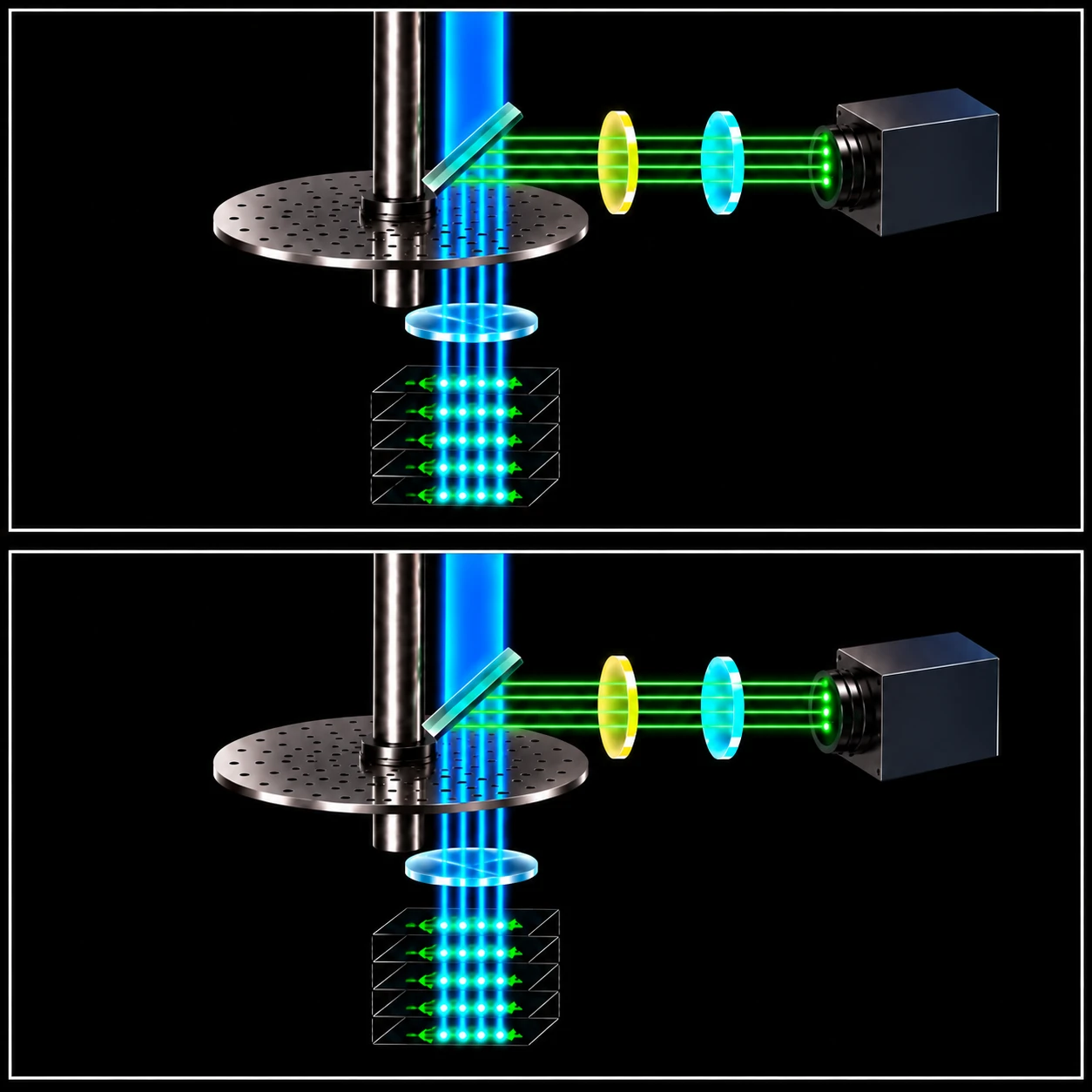
Unlike point scanning confocal systems that typically employ point detectors (e.g., PMTs and APD), spinning-disk systems use a camera for signal detection, offering advantages in speed and dynamic range.
Spinning-disk frame rates are limited by sample brightness and disk rotation speed. Modern spinning-disk designs illuminate the entire field of view multiple times per disk rotation and can achieve acquisition frame rates well over 100 fps. However, if the camera frame rate outpaces the disk scan speed, spiral artifacts can appear in the image.
Importantly, spinning-disk systems can maintain high frame rates without sacrificing field of view, making them ideal for rapidly scanning large sample volumes.
Cameras also offer superior dynamic range compared to most point detectors, which often saturate when exposed to bright signals. With spinning disks, weak and diffuse signals become visible, which is crucial in tissue samples where protein expression changes can drive distinct biological outcomes. Additionally, the broader dynamic range enables quantitative imaging across a wide intensity spectrum—making spinning disks well-suited for high-content screening.
Pinhole crosstalk and image processing
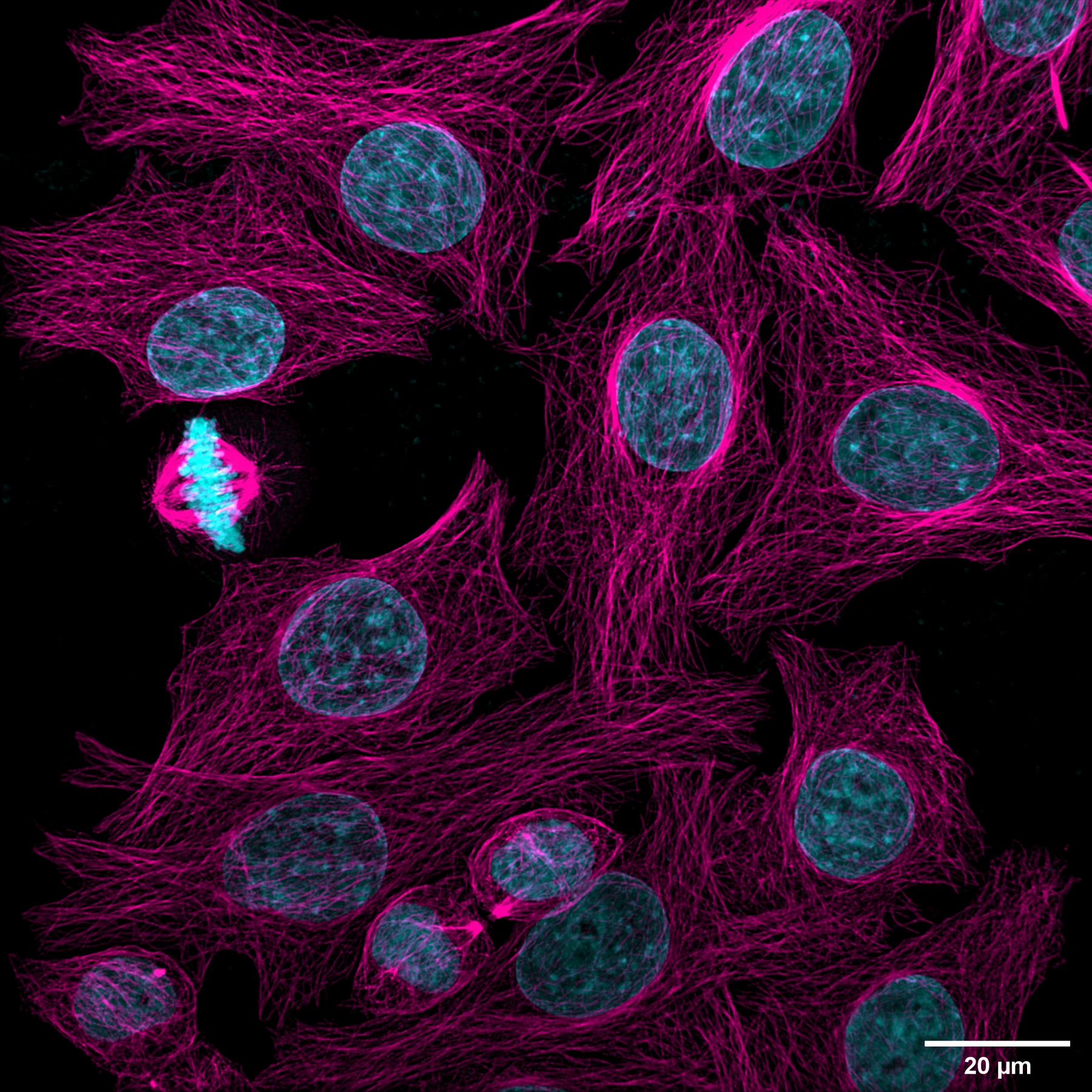
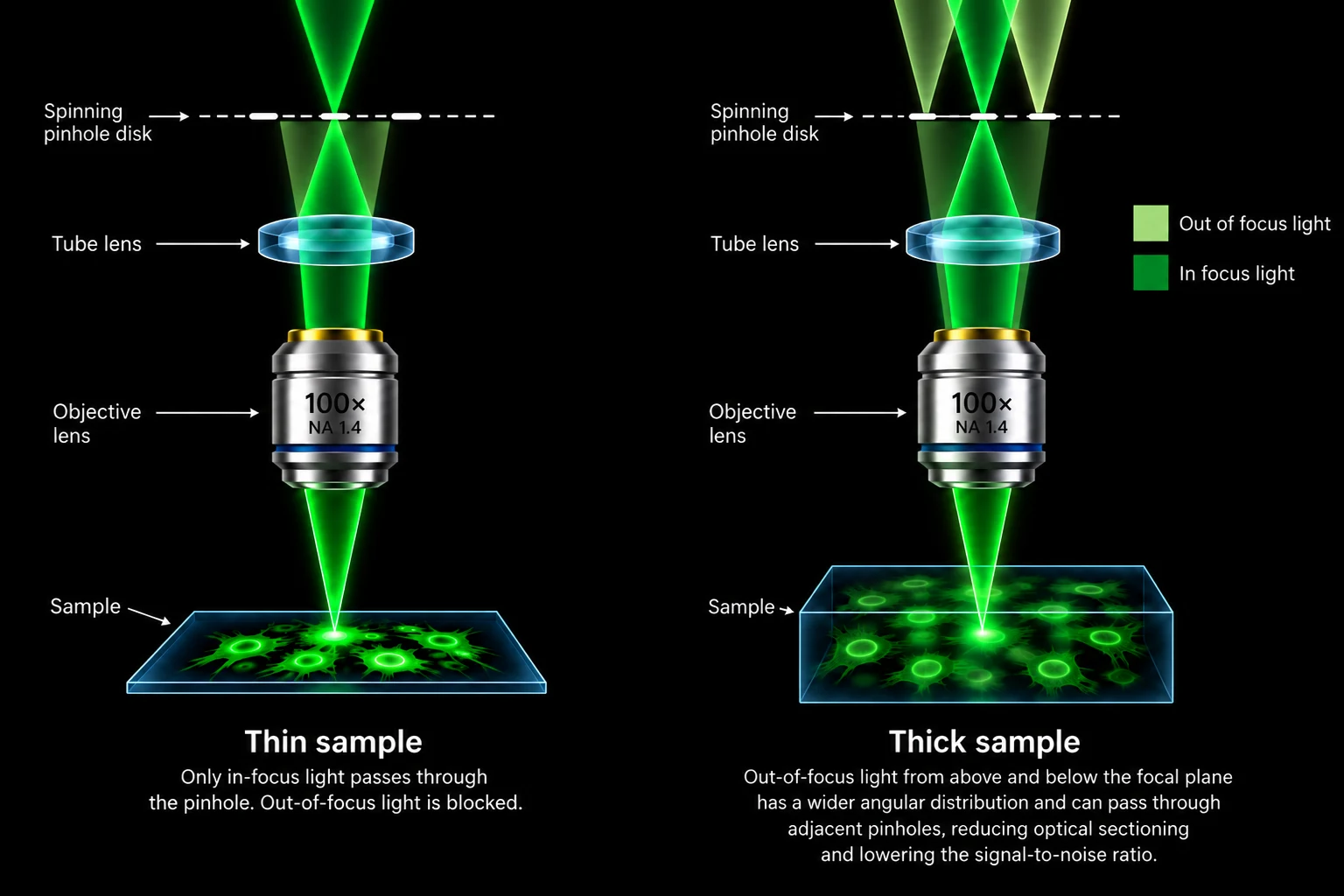
One challenge with spinning disks is pinhole crosstalk, especially when working with thicker samples. Unlike point scanners which employ a single pinhole, spinning disks have multiple closely spaced pinholes. Out-of-focus light from above or below the focal plane can leak through neighboring pinholes, creating increased background noise. Increasing pinhole spacing can reduce crosstalk but at the cost of light efficiency. An easier solution can be to remove the crosstalk computationally using deconvolution resulting in razor sharp artifact-free images.
From spinning disk to super-resolution with SACD
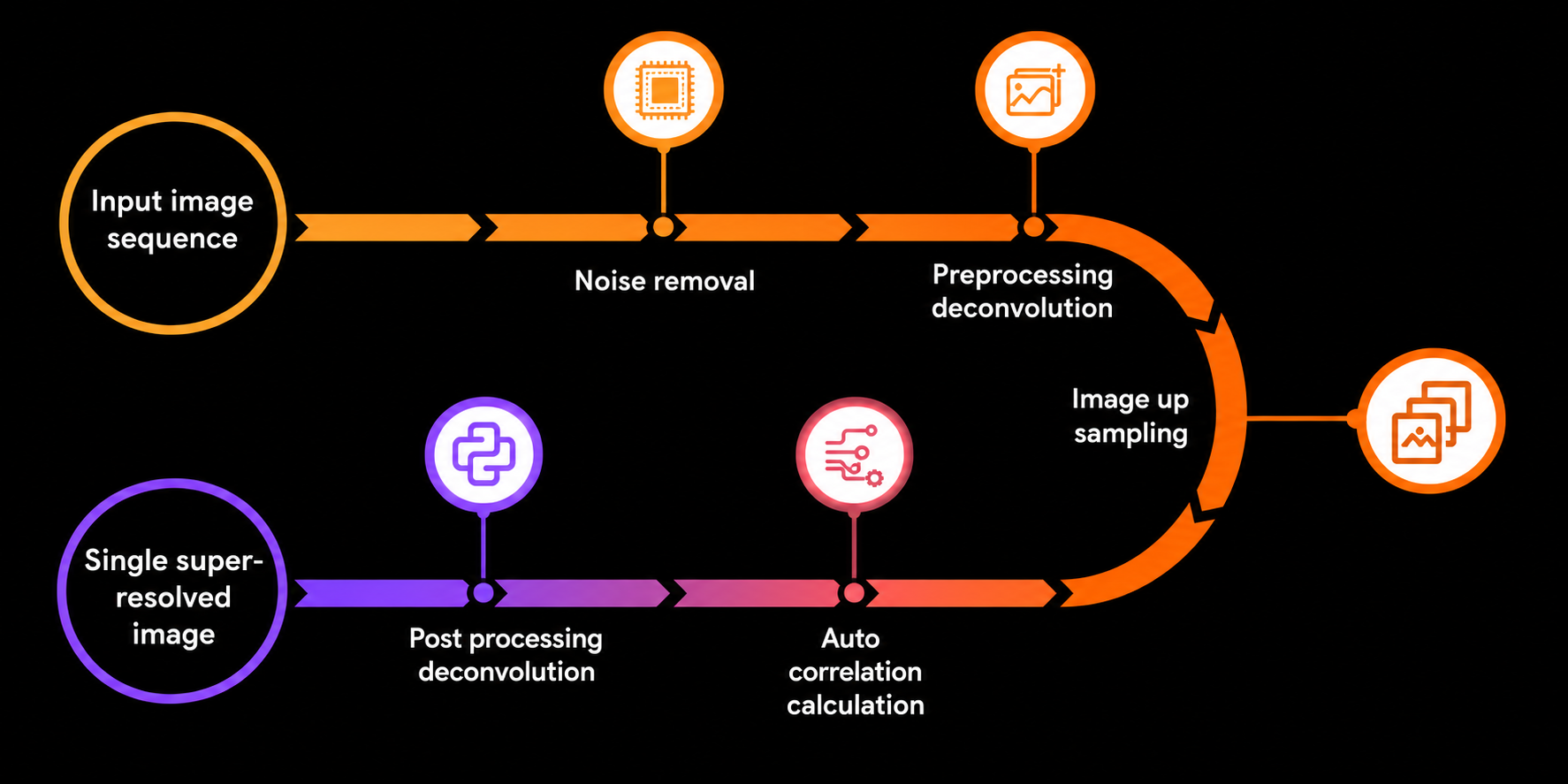
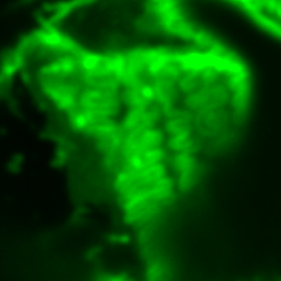
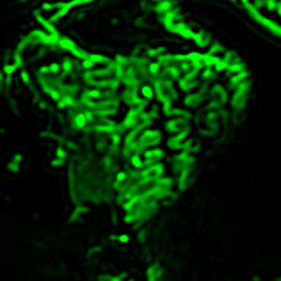
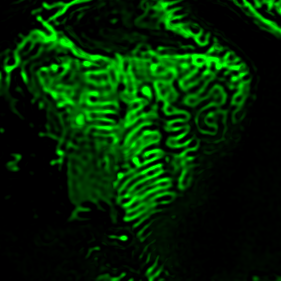
SACD super-resolution technology enables an unmodified spinning disk to deliver super-resolution. SACD (Self-Autocorrelation Two-step Deconvolution) is a super-resolution imaging technique that boosts spatial resolution using a combination of autocorrelation and iterative deconvolution. SACD acquires 20 images per z-plane.
SACD image processing is a 2-step process that first denoises each image to improve the signal-to-noise ratio. The second step employs multi-frame autocorrelation to improve the resolution by looking for fluctuations in the fluorescent signal.
By leveraging these steps, SACD can achieve a lateral resolution of 120 nm. SACD-enabled spinning disk offers highly versatile confocal technology able to super-resolve structures in thick samples.